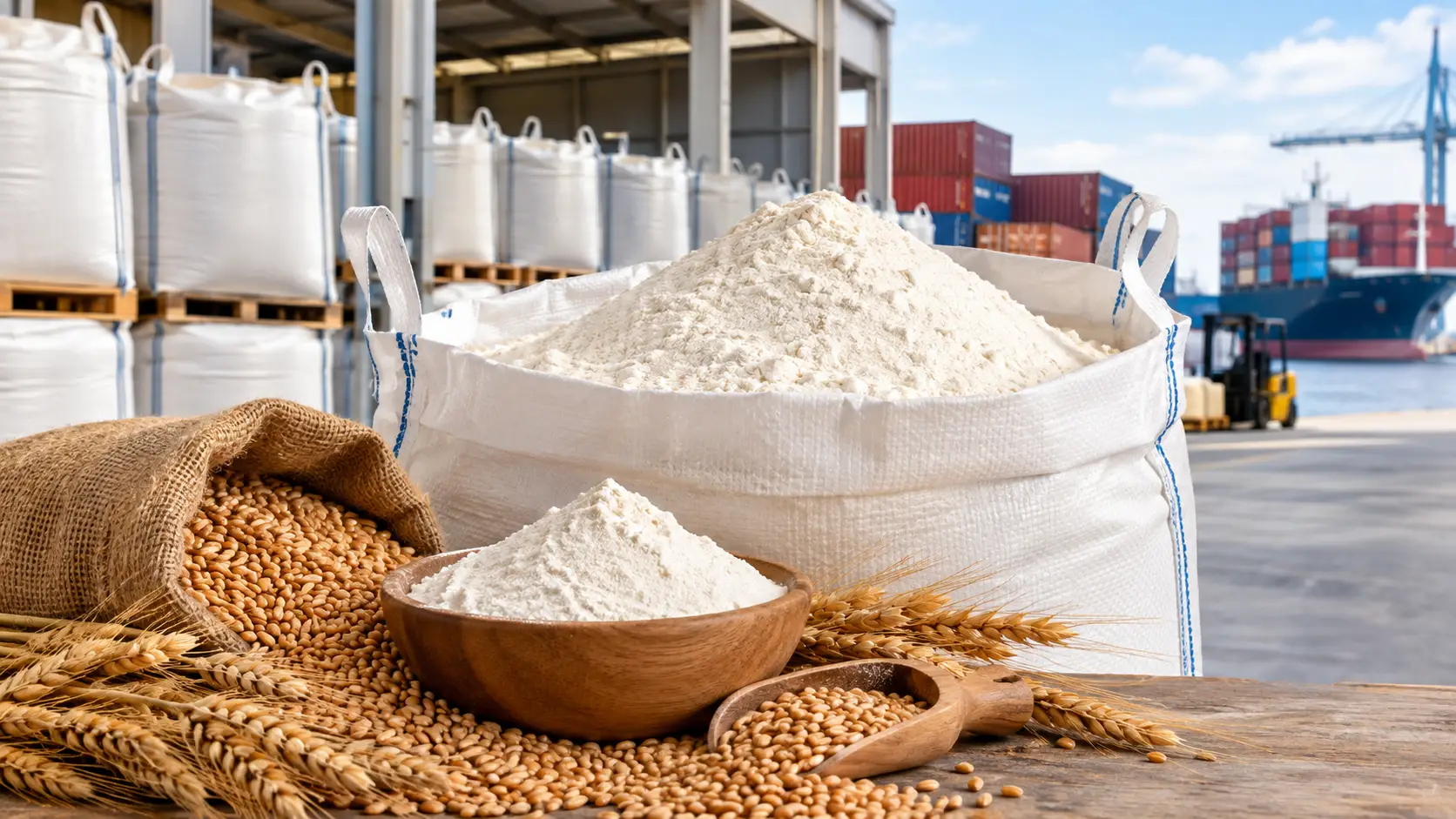
Wheat flour looks simple on a shelf, but sourcing it in bulk is a different story altogether. Bakeries, food manufacturers, distributors, and restaurant chains all depend on a steady, predictable supply, and even a small slip in quality or delivery can stall production for days. Buying by the tonne rather than the bag changes everything about how suppliers, grades, and logistics need to be handled.
This guide covers what commercial buyers should think through before signing a bulk wheat flour contract, from grade selection to storage, to help avoid the mistakes that end up costing time and money.
Why Bulk Buying Wheat Flour Is Different
Buying a few bags of flour for a home kitchen and sourcing several tonnes for a commercial operation are not remotely comparable tasks. At scale, small inconsistencies compound. A slightly higher moisture content, an unexpected shipping delay, or a batch that doesn’t match your usual protein levels can affect texture, shelf life, and even food safety compliance across an entire production run.
That’s why commercial buyers need more than just a competitive price. They need a supplier who understands milling standards, packaging requirements, and the realities of cross-border logistics.
Choosing the Right Flour Grade for Your Business
Not every wheat flour does the same job, and picking the wrong grade is one of the most common and costly mistakes buyers make.
- All-purpose flour works well for general baking and kitchens that need flexibility over anything too specialized.
- Whole wheat flour suits buyers building nutrition-forward products, like artisan breads or health-focused snacks.
- Semolina is a must for pasta makers and certain traditional bakes that need a coarser, sturdier texture.
Before committing to a bulk order, it’s worth testing a small batch against your own recipes first. Flour that works perfectly in one bakery’s oven can behave quite differently in another, depending on humidity, equipment, and how the recipe is put together. Suppliers who carry a real range of agro products, rather than just one generic grade, are usually better placed to help you find the flour that actually fits what you’re making.
Quality Checks That Actually Matter
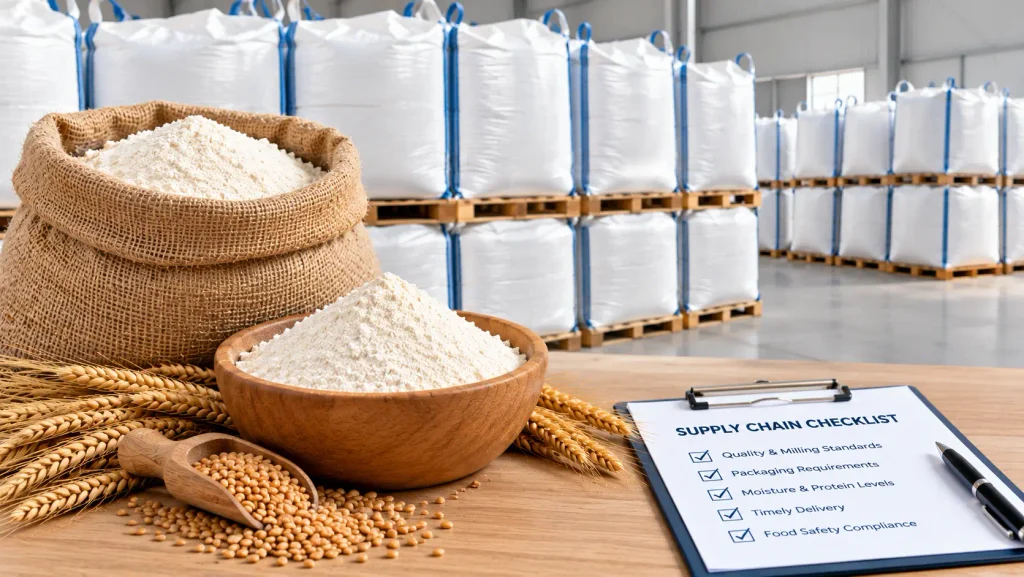
When you’re sourcing at volume, quality control can’t be an afterthought. A few checks worth building into every purchase order:
Protein Content
This is usually the first thing worth checking, since it dictates how the flour behaves once it hits the mixer. Bread doughs need higher protein to develop the gluten structure that gives them rise and chew, while cakes and pastries call for something softer and lower in protein, or the final product turns out dense and tough.
Moisture Levels
This is the next thing to watch, and it’s easy to overlook. Flour that’s been milled or stored with too much moisture in it doesn’t just lose shelf life faster it can clump, cake, or even start to spoil somewhere between the mill and your warehouse, especially on longer shipping routes where temperature and humidity shift along the way.
Ash Content and Color
These tell you something about how the wheat was actually milled. A higher ash content usually means more bran made it into the final flour, which shows up later as a slightly darker color and a coarser texture in whatever you’re baking. Depending on your product line, that might be exactly what you want, or it might not be.
Freedom from Contaminants
This isn’t really negotiable. Foreign matter, insect activity, mold any of these should stop an order in its tracks. A supplier worth working with will have lab results or a certificate of analysis ready to hand over without you having to chase them down for it.
Buyers who skip these checks tend to find out the hard way a spoiled batch, an inconsistent bake, a customer complaint that the lowest price rarely tells the whole story.
Packaging and Storage Considerations
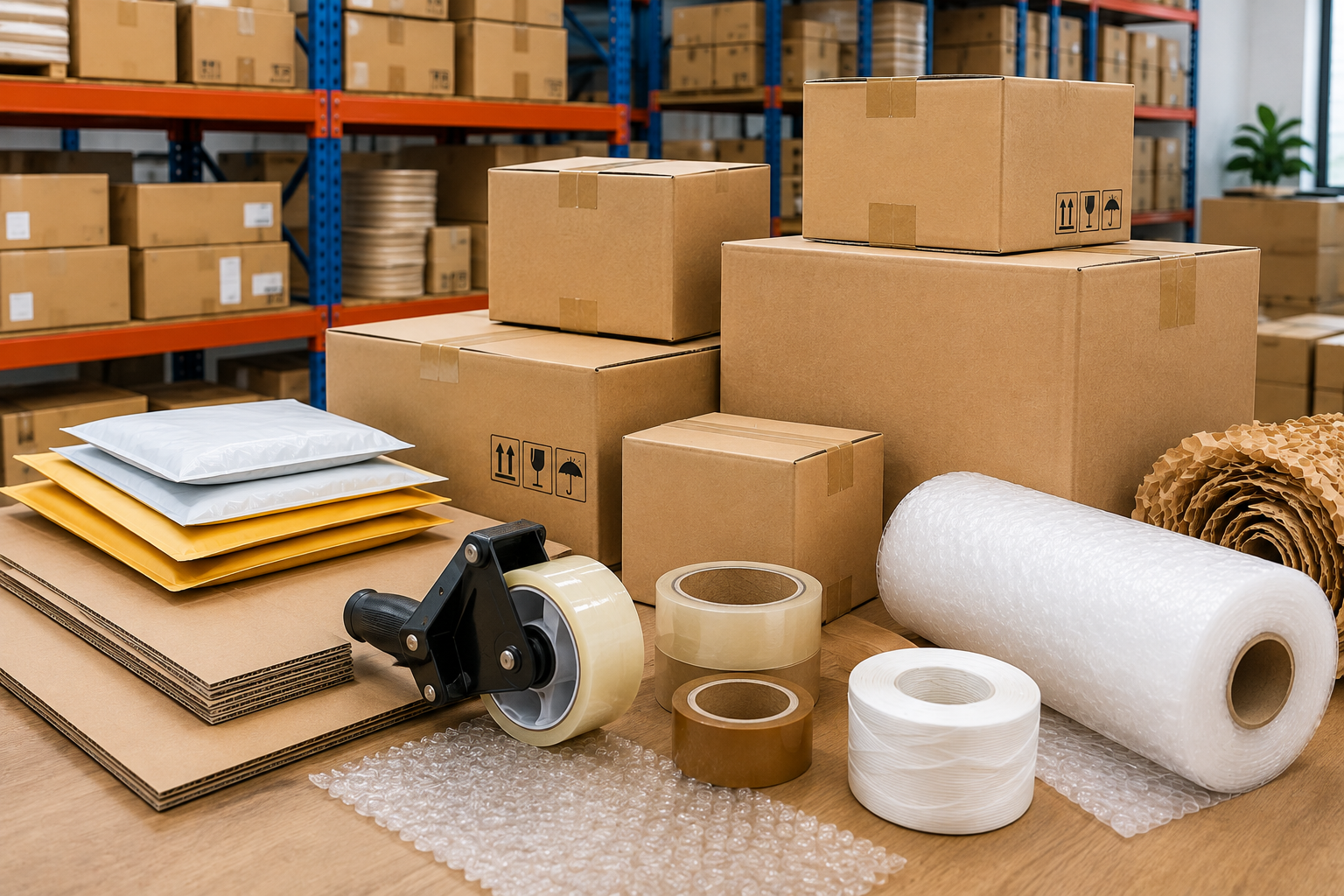
Bulk wheat flour needs packaging built for its journey, since it absorbs moisture and odors easily. Options range from multi-wall paper bags to bulk totes and silos, depending on your storage setup and climate. Suppliers with real packaging expertise can help match the right format instead of just defaulting to the cheapest one. Once it arrives, storage discipline matters just as much: keep it cool, dry, rotated first-in-first-out, and inspected on arrival, since even good flour degrades fast in poor conditions.
Working with Suppliers Who Understand Bulk Logistics
International sourcing comes with its own problems: customs paperwork, shipping timelines, currency swings, the odd port delay so it’s worth working with a supplier who’s already dealt with these rather than learning on a live order, and a partner who also handles contract manufacturing usually reads production timelines better too. It also helps to ask where the wheat comes from and how it’s milled, since a supplier who can answer clearly and back it up with documentation is almost always the safer long-term bet.
Building a Reliable Long-Term Supply Chain
One-off purchases are fine when you’re testing out a new supplier, but most commercial buyers eventually want something more repeatable. A few things tend to matter most once you’re ready to move past trial orders:
- Consistent pricing structures: locking in terms that don’t swing wildly with every shipment, so budgeting doesn’t turn into guesswork.
- Clear minimum order quantities: agreed upfront, so both sides know what to expect from every purchase order.
- Defined lead times: set early, rather than discovered after a delay has already thrown off your production schedule.
- Agreed quality tolerances: spelled out clearly so there’s no ambiguity if a batch falls slightly outside spec.
Diversifying across mills and regions through a sourcing partner with a broad supplier network protects you from the disruption a single source can’t absorb.
Final Thoughts
Sourcing bulk wheat flour is as much about relationships and process as it is about the product itself. Grade selection, quality testing, packaging, and logistics all need to work together, and the buyers who treat this as a strategic decision rather than a routine purchase order tend to end up with fewer disruptions and better margins over time.
At Zairyo+, we work with commercial buyers across food production and retail to source wheat flour and other agro-commodities that meet international quality standards, without the guesswork. If you’re looking to simplify your bulk flour sourcing, get in touch with our team to discuss your requirements.