Most businesses only think about packaging once it becomes a problem. A specific financial statement or report where margins are shrinking Maybe it’s a logistics delay. Maybe it’s a dented box a customer notices right away.
Scaling from a few hundred units to tens of thousands changes the sourcing process. What works for a small test batch may not work at scale. Businesses that fail to adjust often pay more. Or they end up with lower-quality packaging without realizing it.
Get bulk sourcing right, and the results show. Costs go down. Packaging stays consistent, shipment after shipment. Below is a practical look at how that’s done, and where Zairyo+ comes in as a sourcing partner.
1. Nail Down Your Specs Before Asking for Quotes
This step gets skipped more than it should. Before contacting suppliers, know exactly what you need. Avoid vague specifications.
Start with the packaging type. It could be rigid containers, pouches, corrugated boxes, paper bags, cartons, or tubes. Then define the material — PET, HDPE, PP, LDPE, PVC, paperboard, or fluted cardboard. Add the exact dimensions and weight capacity. Note any printing or branding needs. List the regulatory standards it must meet.
Suppliers can’t quote accurately on vague requests. Specs that change mid-order cause delays. They also add unplanned costs.
2. Match the Packaging Type to the Actual Product
Not every material fits every product. Picking the wrong one at bulk volume gets expensive fast.
Plastic containers hold up well structurally. They’re common in food, cosmetics, electronics, and household goods. Flexible packaging works differently. It’s made from films or plastics like polyethylene and polypropylene. It’s a better fit when freshness matters, or when packaging needs to mould around an odd shape.

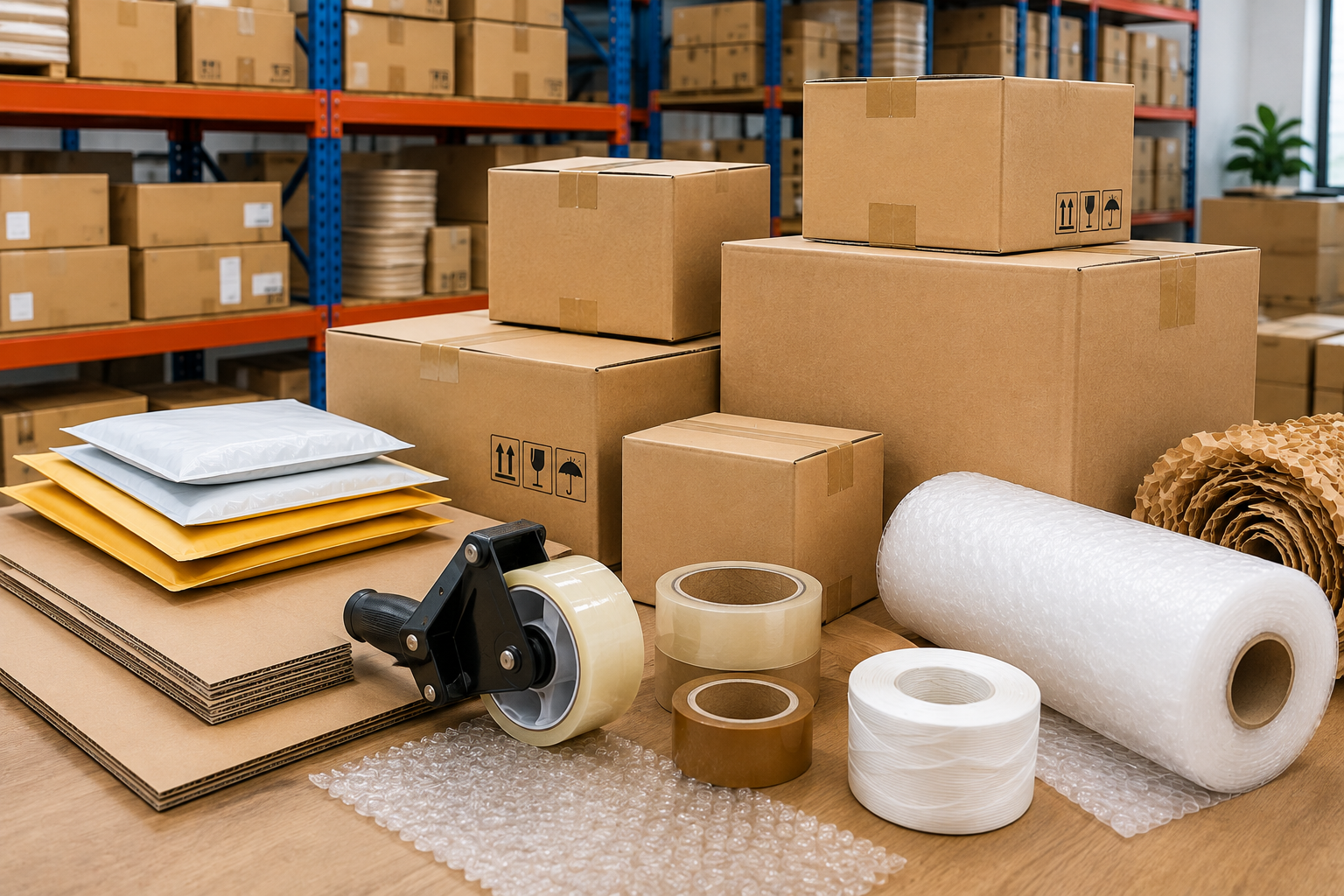
Corrugated packaging suits heavy or fragile items. It offers cushioning and stackability. That’s why it dominates FMCG, e-commerce, and industrial shipping. Paper bags and boxes work well for brand presentation. They also support sustainability goals. For creams, gels, or anything needing controlled dispensing, plastic and aluminium tubes are usually the better choice.
A sourcing partner with a wide material range can help. Zairyo+ is one example. The right partner matches packaging to your product’s actual handling and storage needs. That’s better than defaulting to whatever’s fastest to order.
3. Don’t Choose Suppliers on Price Alone
Price matters. But it should not be your only consideration. A cheaper unit cost stops looking cheap the moment a batch fails compliance. Or shows up damaged.
Check a few things before committing. Does the supplier meet standards like ISO, ASTM, RoHS, or REACH? Can they show proper traceability and certification? Do they have a track record of consistent quality across large runs? Are they upfront about lead times?
This is where a sourcing partner adds real value. They pre-vet manufacturers on your behalf. That means fewer surprises after a shipment has already left the dock. The same logic applies to contract manufacturing for the product itself. Packaging and product need to meet the same standard.
4. Look at the Full Cost, Not Just the Quote
Bulk pricing can look attractive at first. But the final cost is often higher than it appears.
Factor in the minimum order quantity. Does it match what you actually need? Add storage costs for holding large volumes of inventory. Include freight and customs charges for international orders. Account for currency swings if you’re paying overseas suppliers. Don’t forget the cost of rework or rejected stock if quality control slips.
Do not compare suppliers by unit price alone. Look at the total landed cost instead. This includes shipping, customs, storage, and quality control. The real cost is what you pay to get usable packaging into your facility. This matters even more when packaging sourcing overlaps with other bulk purchases, like industrial chemicals. The same cost traps apply there too.
5. Sort Out Logistics Before You Place the Order
Bulk packaging can be bulky and heavy. Some materials are also easily damaged. So logistics should be planned early, not left for later.
Know how the shipment will move. Know roughly how long transit will take. Understand the customs paperwork involved if it’s crossing borders. Freight handling and realistic delivery timelines decide whether your order arrives usable and on time. That matters more than whether it simply left the factory on schedule.
This is where dealing directly with an unfamiliar overseas manufacturer often gets messy. Customs documentation takes real experience. Cross-border coordination does too. Mistakes here cause more delays than most packaging design issues.
6. Stop Splitting Your Sourcing Across Multiple Vendors
A common pattern shows up as businesses grow. Different packaging materials get bought from different suppliers. Often in different countries. Each with its own timeline.
It feels like a way to get the best price on each item. In practice, it usually backfires. There are too many contacts to manage. Quality is inconsistent between vendors. Shipments rarely line up.
Working with one sourcing partner solves this. Zairyo+ covers multiple packaging categories under one relationship. That includes plastic containers, flexible packaging, corrugated boxes, paper bags, printed cartons, and dispensing components. Manufacturers are vetted. Quality checks and logistics are built in. That means one point of contact, not five.
7. Treat It as a Relationship, Not a One-Time Order
Bulk sourcing works better as an ongoing relationship. Not as a series of one-off transactions.
A supplier who understands your product moves faster when problems come up. The same goes for a supplier who knows your seasonal demand. Or your quality expectations. This kind of familiarity tends to bring better pricing over time. Trust builds with order history.
Conclusion:
Sourcing packaging in bulk isn’t about chasing the lowest unit price. It’s about getting the specs right. Choosing the right material. Vetting suppliers properly. Understanding the true landed cost. Planning logistics with care.
Skip any one of these, and something usually goes wrong later. It could be a delay. A quality issue. Or a cost nobody planned for.
An experienced sourcing partner removes much of this complexity. Zairyo+ sources packaging materials in bulk from vetted manufacturers worldwide. Quality assurance, compliance expertise, and logistics support come built into the process. If you’re planning a bulk order, reach out to Zairyo+ to talk through what you need.